The goal of credentialing is to demonstrate that you have the knowledge necessary to make the best decisions for your patient care.
In order to support your credential, we have consulted many Subject Matter Experts (SMEs) to ensure that the content on the exam is accurate, current, and reflects the breadth of your expertise.
One such SME is Nikia Ali, a VAT Nurse from Allen, Texas.
“It is imperative for certified nurses to have their voices heard, practices recognized, and skills acknowledged,” Ali said. “Without our expertise, the world would suffer.”
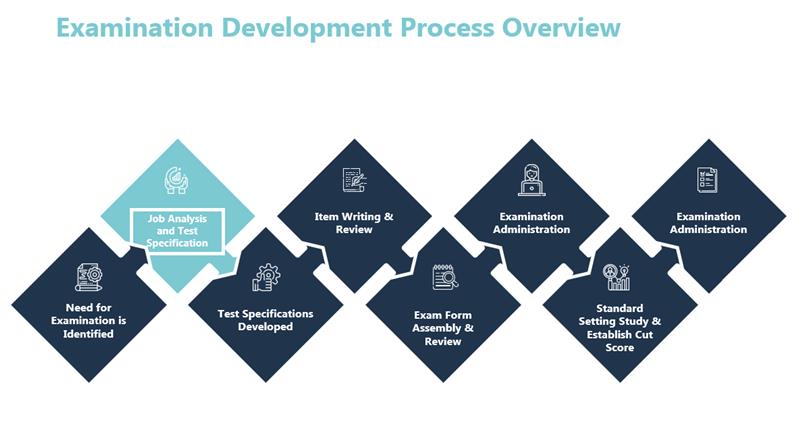
The first step in the exam creation process is to establish what a VA-BC™ should know to perform their jobs well. We gather 12 SMEs together for a two-day Job Task Analysis (JTA). SMEs are selected based on their experience and locations. We want to make sure that the test is not biased to any one particular region of the US. We also select SMEs with experiences with adults, pediatric, and neonatal patients. We look for SMEs with experience in both large hospitals and many other settings (emergency, home health, and clinics).
This is an intense review of the knowledge and skills required for a VA-BC™. This begins with a discussion of “what does every VA-BC™ need to know”, and then fine-tunes this list through questions about whether these practices are supported by the standards and guidelines created by other professional organizations. This Job Task Analysis is reviewed and updated every five years.
Annia Luo Xu – a nurse practitioner at UCLA specializing in interventional radiology, with a focus on pediatric patient care – is another SME.
“I was glad to have the opportunity to participate in the Job Task Analysis project,” Xu said. “It was a meaningful experience to collaborate with colleagues in the field to help ensure that the certification accurately and thoroughly reflects the current knowledge, skills, and responsibilities of professionals working in vascular access.”
We next develop the Test Content Outline based on the results of the job task analysis. A gap analysis helps establish where we will need to write new questions and review any older questions.
“Contributing to initiatives like this is important because it helps maintain the integrity and relevance of the certification process,” Xu said. “Volunteer involvement from practicing clinicians ensures that standards are grounded in real-world practice and continue to evolve with the field.”
Another team of SME volunteers become the Item Writers. They are assigned topics based on this gap analysis, and create the first draft of the questions to be added to the exam question bank. Each item must have a current reference, have only one correct answer, and have three plausible (but incorrect) answers.
The next step is Item Review. Yet another team of SME volunteers will meet to review the new and the revised items. The questions are reviewed and edited as needed to ensure that they are clear and that they only have one correct answer. At this point the questions will be added to the question bank, but they will still have to go through several more reviews.
The exam is created by selecting items that match the categories in the Test Content outline. A blend of 125 validated questions and 25 new questions will be assembled for the final test format. Multiple forms may be used during each cycle. A Forms review committee then reviews the exams once more to make sure that there are no similar or duplicate questions on the exam.
The exam is then administered for a full cycle (either June or December). An in-depth statistical review is done at the end of the cycle to ensure that the exam results did not show bias. Questions that statistically appear “too easy” and “too hard” will then be reviewed by a Problem Identification (PIN) committee of an additional group of SMEs. At this point questions may be sent back to item writers to revise, or they may be then added to the validated questions in the bank.
This complete cycle requires 40-50 Subject Matter Experts to review the questions at all of these various stages. When you have passed the VA-BC™ exam, you have joined the ranks as Subject Matter Experts in Vascular Access.
“I believe volunteering with organizations like VACC is valuable for professional growth and for supporting the broader community of vascular access professionals,” Xu said. “It’s a way to give back to the specialty while helping to strengthen the quality and credibility of our profession.”